


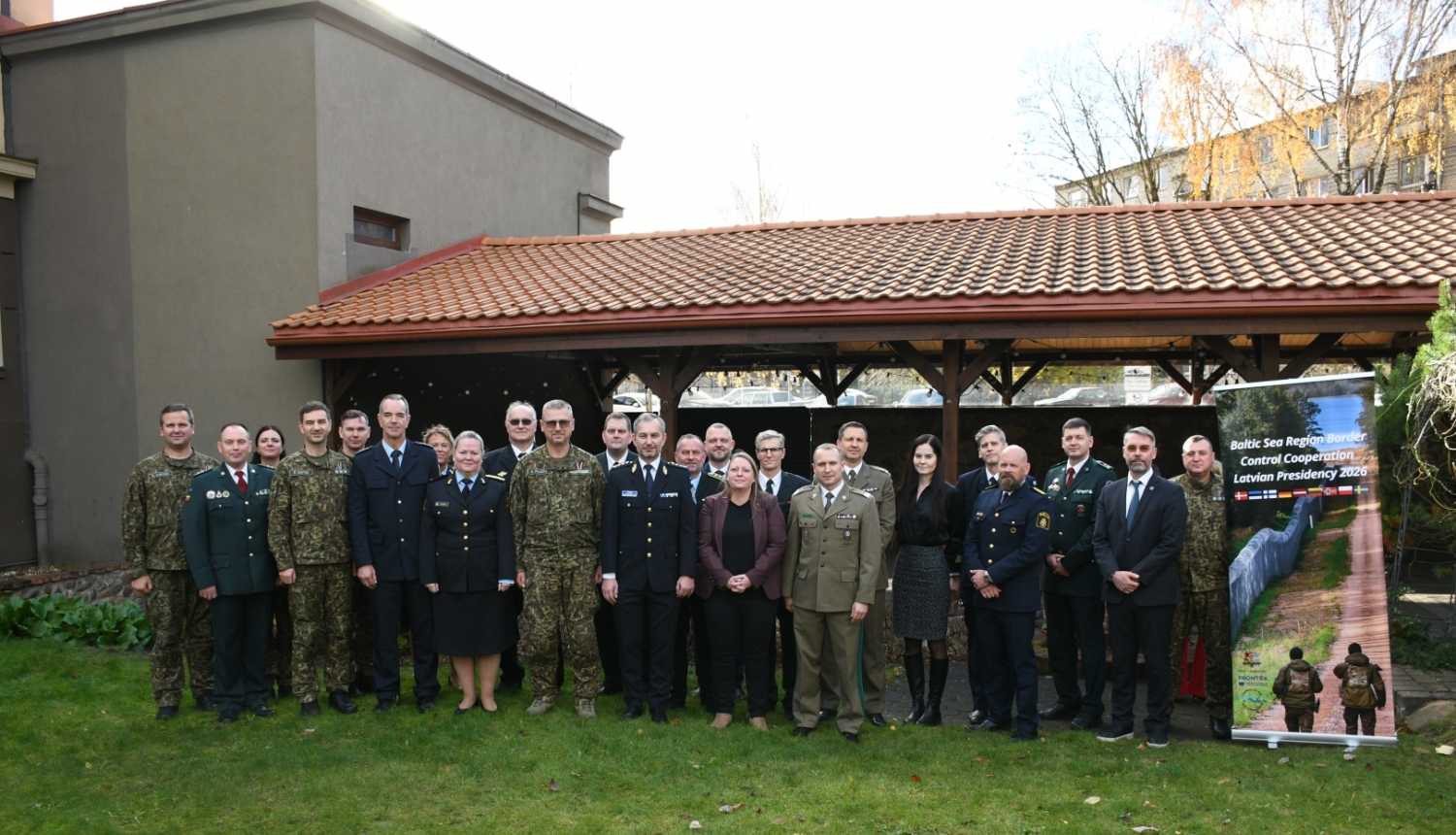
On 5 November 2026, the Heads Conference of the Baltic Sea Region Border Control Cooperation (BSRBCC) was held in Jelgava, organised by the State Border Guard of Latvia within the framework of the Latvian Presidency.
The Conference brought together representatives of BSRBCC Member States and the European Border and Coast Guard Agency (Frontex) to review ongoing cooperation, discuss current maritime border security issues and define future cooperation priorities in the Baltic Sea region.
During the Conference, participants discussed the implementation of Latvia’s 2026 Presidency Action Plan, reviewed the outcomes of the 1st and 2nd BSRBCC Annual Threat Assessment Seminars and presented the BSRBCC Annual Threat Assessment Report 2026. Participants were also briefed on the results of the Maritime Operational-Tactical Exercise “Ronis 2026”, Frontex’s situational overview and summary of the Maritime Joint Operation (MMO), as well as the outcomes of the BSRBCC Cruise Ship Meetings and the Aviation Expert Meeting.
Particular attention was paid to hybrid activities in the Central and Southern Baltic, including recent challenges and threats to maritime security and underwater infrastructure. During roundtable discussions, participants addressed hybrid threats, the instrumentalisation of migration and secondary movements as significant security challenges in the Baltic Sea region. The development of a new BSRBCC logo was also discussed.
At the conclusion of the Conference, Norway presented its 2027 Presidency Action Plan, and the BSRBCC Presidency was formally handed over to Norway.
On 6 November 2026, the Conference participants also attended the Official Ceremony Commemorating the 107th Anniversary of the State Border Guard of the Republic of Latvia, held in Riga and at Jelgava Palace.
The Conference strengthened cooperation between the Border Guard authorities of the Baltic Sea region countries, promoted the exchange of experience and information, and contributed to developing a common understanding of current and emerging security challenges in the field of maritime border surveillance.